

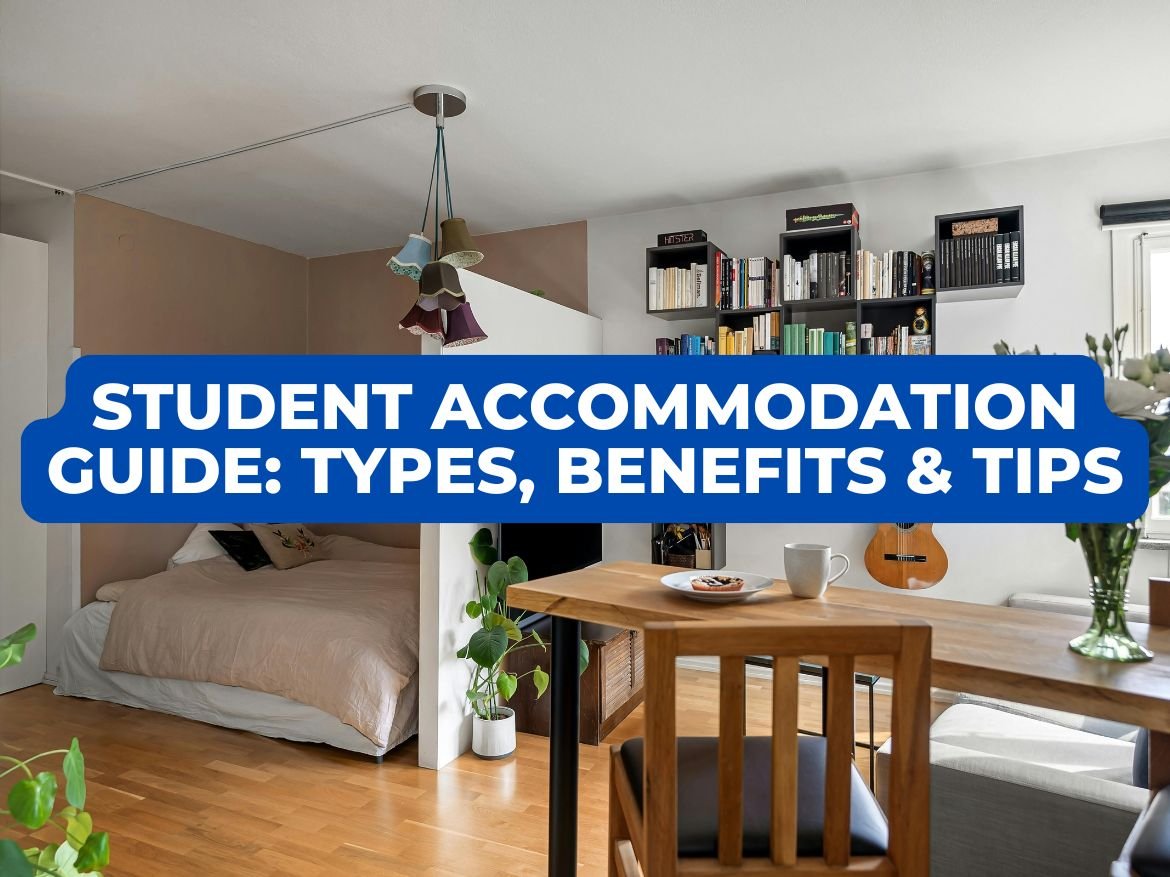
From late-night study sessions to lifelong friendships, accommodation is where the real campus journey of students begins. So, it has been a major concern for international students who are enrolled in a university/college in an overseas country. The type of student accommodation, its location, amenities, and there are a lot of other things that are often considered while searching for accommodation. Moreover, how much freedom an accommodation has and what rules are imparted – these are the other concerns of students searching for accommodations.
For the new searchers, it can be a bit confusing to look for accommodation in the beginning. But a little guidance can do a lot for them. Here, you will get a student accommodation guide, with the help of which you can get concise information about this subject.
Types of Accommodations for Students and Their Benefits
Here are some popular types of accommodations for students in different parts of the world.
1. Halls of Residence
Halls of residence are the accommodations offered by universities. Such accommodations are usually found on-campus or some of them may be attached to campuses.
Benefits: First, students get opportunities to live in proximity to their universities. So, sometimes, they just need to go from one building to another building to attend the lectures. Besides, students live in the security of the university, so it is one of the safest types of accommodations for them. Furthermore, students may find full academic support. Sometimes, some universities start some special programs in halls of residence also. Additionally, individuals can use the university facilities while living in the halls of residence. Some good amenities can also be found in halls of residence.
2. PBSA (Purpose-Built Student Accommodation)
PBSA stands for Purpose-Built Student Accommodation are for students who like private accommodations but with a campus-like atmosphere. PBSA includes shared rooms, ensuite rooms (private rooms with attached bathrooms), non-ensuite rooms (private rooms but shared bathrooms), studios, and apartments in a big property. These properties are owned by private owners; therefore, they are considered the perfect private alternatives to halls of residence.
Benefits: There are multiple options of PBSA properties, so students can choose according to their budgets and requirements. High-end amenities can be found in several properties, such as gyms, sports courts, cinema rooms, games rooms, swimming pools, and a lot more. The basic amenities and services, such as laundry, Wi-Fi, study room, study table and chair, etc., can also be found in PBSA. But different PBSA properties offer a different set of amenities and services, so you have the option to choose as per your budget. Moreover, unlike halls of residence, where you are required to follow some strict rules, PBSA properties have fewer rules, so more freedom.
3. Private Rental Apartments
Private rental apartments are the houses located outside all the student campuses. They can either be near the university, or they can be at some distance or any part of the city where you are enrolled. There are different types of private apartments, so you have numerous choices.
Benefits: The major benefit of choosing a private rental apartment as your student accommodation is that you can have full freedom. The halls of residence have university rules, and PBSA properties have a few, but still some rules imparted by the owners. Moreover, homestays, which will be mentioned next, also have the rules imposed by the homeowners. But the private rental apartments usually provide full freedom except for the maintenance of the house. Some apartments may have the basic rules. Moreover, in some cities, you can find some private apartments at cheaper rates. In the private apartments, you can make your own arrangements.
4. Homestays
Homestays are a type of arrangement in which some families provide rooms or spaces for students to live.
Benefits: Homestays are the best medium to immerse into the culture of the city/country where you are living since they provide you an opportunity to live and see the daily life of a family there. Besides, these are also the budget-friendly options for students.
Tips for Finding Accommodation Abroad
Here are some of the tips to find an ideal accommodation abroad.
- Start early, at least six months before your university session, so that you could get accommodation at a reasonable price and as per your preferences.
- You must check the location of accommodation if you are looking for private accommodation. It is recommended to find a place to stay near your university/college. If you don’t find accommodation near your institute, then you should try to find accommodation within easy driving distance and with good transport services nearby.
- Check amenities according to your preference. Also, check whether they are justified according to the price you are going to pay.
- Consider certain things, such as what your budget is, whether you want an ensuite room or one with a roommate, and more.
To get accommodation in your destination country, you should use online sources today, and also do the virtual tour.
FAQs
1. What are the different types of student accommodation?
The types of student accommodation include halls of residence, PBSA (Purpose-Built Student Accommodation), private rental apartments and homestays.
2. What is PBSA accommodation?
PBSA stands for Purpose-Built Student Accommodation. These are privately managed student housing properties with facilities like study rooms, gyms, Wi-Fi and shared or private rooms.
3. Which accommodation is best for indian students?
The best accommodation depends on budget, lifestyle and personal preferences. First year students prefer halls of residence or PBSA for safety and social life.
4. Are university halls of residence safe?
Yes, halls of residence are considered one of the safest accommodation options because they are managed by universities and often include security and student support services.
5. What are the benefits of living in student accommodation?
Student accommodation offers convenience, opportunities to make friends, access to amenities and easier access to universities and transport.
6. Is private student accommodation expensive?
The cost depends on the city, room type, amenities and location. Shared rooms are usually more affordable than studios or private apartments.
7. What is the difference between ensuite and non-ensuite rooms?
An ensuite room has a private attached bathroom, while a non-ensuite room includes a private bedroom with a shared bathroom.
8. Are homestays good for international students?
Yes, homestays are good for students who want a budget-friendly option and an opportunity to experience local culture and family life.
9. How early should students book accommodation abroad?
Students should ideally start searching and booking accommodation at least 4–6 months before their academic session begins.
10. What amenities students look for in accommodation?
Students should check for Wi-Fi, laundry, study areas, security, kitchen facilities, transport access, and utility inclusions before booking.
11. Is student accommodation near the university better?
Yes, accommodation near the university can help students save travel time and transportation costs.
12. What is the cheapest accommodation option for students?
Shared rooms, homestays, and some university halls are often the most affordable accommodation options for students.
13. What should students check before booking accommodation?
Students should verify rent details, contract terms, location, safety, reviews, transport links and included amenities before confirming a booking.


Join The Discussion