

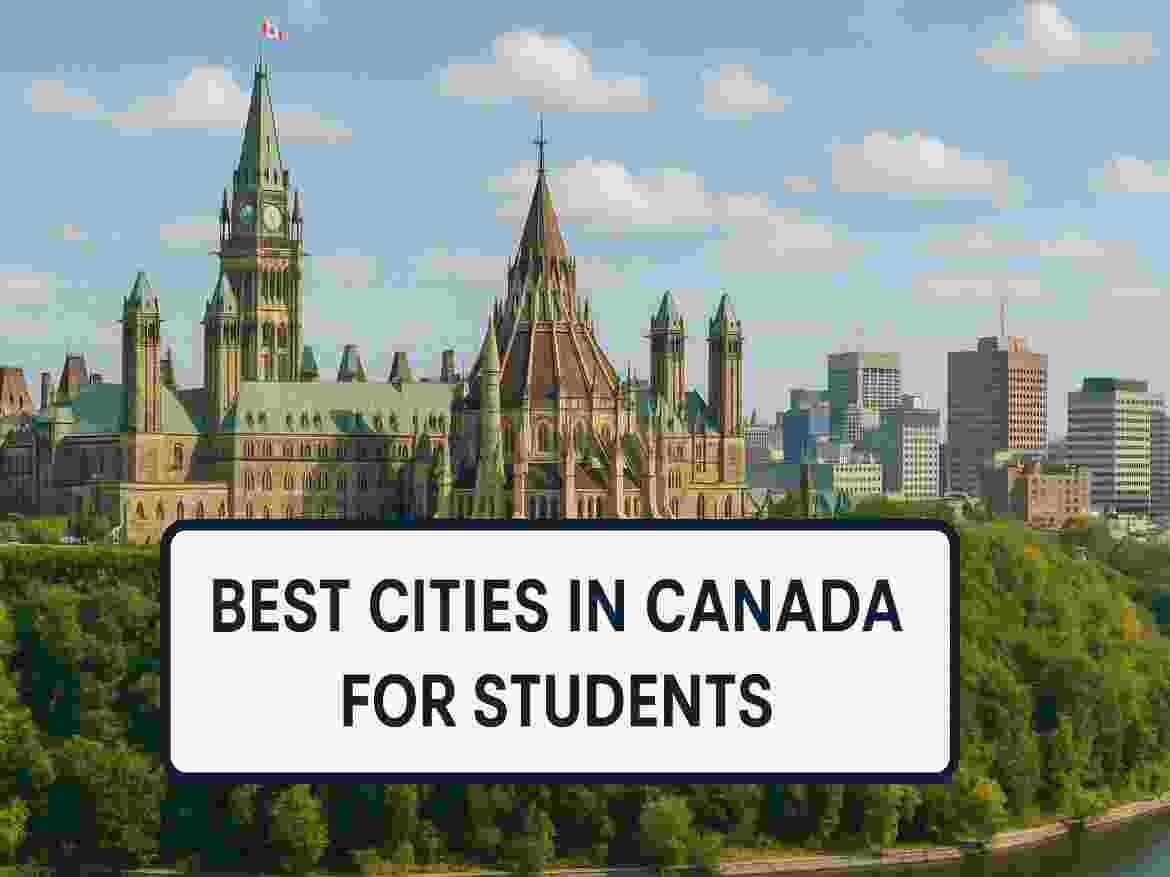
Dreaming of studying abroad in a country that feels like home? Canada offers everything international students look for top-quality education, affordable tuition, safe cities and welcoming communities.
In 2026, Canada remains one of the most popular destinations for students from India, Asia and around the world. The country combines academic excellence with endless opportunities for post-study work and permanent residency.
Why students love Canada:
- Globally recognized universities
- Affordable tuition and living costs
- Friendly, multicultural environment
- Two-year post-graduate work permit
- High chances of PR after study
Quick Highlights
- Top Cities: Toronto, Vancouver, Montreal, Ottawa & Calgary
- Top Universities: University of Toronto, McGill, UBC, University of Alberta
- Average Living Cost: CAD 1,200–2,500/month (city-dependent)
- Post-Study Work: Up to 3 years
- Accommodation: On-campus housing & affordable rentals
10 Best Student Cities in Canada
| City | Top Universities | Avg. Living Cost (Monthly) | Highlights |
| Toronto | University of Toronto, York University, TMU | CAD 2,000–2,500 | Career hub, multicultural city |
| Vancouver | UBC, Simon Fraser University | CAD 1,800–2,300 | Coastal beauty, global exposure |
| Montreal | McGill University, Concordia University | CAD 1,200–1,700 | Affordable, cultural, bilingual |
| Ottawa | University of Ottawa, Carleton University | CAD 1,400–1,900 | Safe, green, and tech-driven |
| Calgary | University of Calgary, Mount Royal University | CAD 1,300–1,800 | Economic hub, high quality of life |
| Edmonton | University of Alberta, MacEwan University | CAD 1,200–1,700 | Affordable and vibrant |
| Quebec City | Laval University | CAD 1,100–1,500 | Historic, affordable, French-speaking |
| Winnipeg | University of Manitoba, University of Winnipeg | CAD 1,100–1,600 | Budget-friendly and peaceful |
| Hamilton | McMaster University | CAD 1,500–2,000 | Research-focused, near Toronto |
| London (Ontario) | Western University, Fanshawe College | CAD 1,200–1,700 | Safe, student-friendly, affordable |
Toronto
Toronto tops the list as Canada’s best student city in 2026. It’s home to world-class universities, diverse communities and unlimited career opportunities. Students enjoy access to internships, global companies and a lively city life filled with events, food and festivals.
Top Universities:
- University of Toronto
- Toronto Metropolitan University (TMU)
- York University
Why Choose Toronto?
Global exposure, strong job market, and exciting city life.
Vancouver
Vancouver offers a perfect mix of nature and academics. Surrounded by mountains and ocean, it is ideal for students who love adventure while pursuing top quality education.
Top Universities:
- University of British Columbia (UBC)
- Simon Fraser University
Why Choose Vancouver?
Beautiful weather, sustainability focus, and thriving tech opportunities.
Montreal
Montreal consistently ranks as one of the most affordable and student-friendly cities in the world. It is known for its lively nightlife, arts scene and bilingual culture (English & French).
Top Universities:
- McGill University
- Concordia University
Why Choose Montreal?
Low tuition fees, cultural diversity, and strong academic reputation.
Ottawa
Ottawa is known for its safety, greenery and high-tech industries. It’s a great place for students who value peaceful surroundings with excellent education and career prospects.
Top Universities:
- University of Ottawa
- Carleton University
Why Choose Ottawa?
Safe environment, research excellence, and bilingual education.
Calgary
Calgary is an economic powerhouse with one of the highest employment rates in Canada.
It offers affordable living, friendly locals and a growing international student community.
Top Universities:
- University of Calgary
- Mount Royal University
Why Choose Calgary?
Strong job market, affordable housing, and outdoor adventures.
Edmonton
Edmonton offers quality education and low living costs, making it a favorite for international students. It is also known for its innovation, winter festivals and welcoming communities.
Top Universities:
- University of Alberta
- MacEwan University
Why Choose Edmonton?
Budget-friendly and research-driven education.
Quebec City
Quebec City offers a unique blend of history, architecture and affordable education.
It’s a French-speaking city, perfect for students interested in bilingual studies.
Top University:
- Laval University
Why Choose Quebec City?
Low cost of living, cultural richness, and French immersion opportunities.
Winnipeg
Winnipeg is known for its affordability and warm community atmosphere. It is ideal for students looking for quiet surroundings and focused study time.
Top Universities:
- University of Manitoba
- University of Winnipeg
Why Choose Winnipeg?
Affordable, peaceful, and student-oriented.
Hamilton
Located close to Toronto, Hamilton is home to McMaster University, a global leader in research and health sciences. It offers small-town charm with big-city access.
Top University:
- McMaster University
Why Choose Hamilton?
Top-tier research facilities and proximity to Toronto.
London (Ontario)
London, Ontario is a peaceful, student-centered city known for its excellent educational infrastructure and low cost of living.
Top Universities:
- Western University
- Fanshawe College
Why Choose London?
Safe, affordable, and academically strong.
Why Choose Canada for Higher Studies?
- Affordable education compared to the US or UK
- Excellent post-study work opportunities (up to 3 years)
- Safe and diverse student cities
- High-quality life and career prospects
- Easy PR pathways after graduation
FAQs
1. Which Canadian city is best for international students in 2026?
Toronto is considered the best city for international students in 2026. It offers world-class universities, strong job opportunities, cultural diversity, and excellent quality of life.
2. What are the most affordable student cities in Canada?
Montreal, Winnipeg, and Quebec City are among the most affordable cities for students, offering low rent, cheap public transport, and affordable tuition fees without compromising on education quality.
3. Can international students work while studying in Canada?
Yes. International students can work up to 20 hours per week during academic sessions and full-time during scheduled breaks without a separate work permit, as long as they hold a valid study permit.
4. How much does it cost to live in Canada as a student?
The average living cost for international students in Canada is around CAD 1,200 to CAD 2,500 per month, depending on the city, lifestyle, and accommodation type.
5. What are the top universities in Canada for international students?
The University of Toronto, McGill University, University of British Columbia (UBC), University of Alberta, and McMaster University are consistently ranked among the top universities in Canada for international students.
6. Is Canada safe for international students?
Yes, Canada is one of the safest countries in the world. Its cities have low crime rates, friendly communities, and strong student support systems, making it ideal for international learners.
7. How long can I stay in Canada after I graduate?
Students can stay in Canada for up to 3 years after graduation through the Post-Graduation Work Permit (PGWP), depending on the duration of their study program.
8. What is the Post-Graduation Work Permit (PGWP)?
The PGWP allows international graduates from eligible Canadian institutions to work in Canada for up to three years after completing their program. It’s a great pathway toward gaining permanent residency.
9. What are the admission requirements for Canadian universities?
Typically, you’ll need academic transcripts, English proficiency (IELTS/TOEFL), a Statement of Purpose (SOP), letters of recommendation, and in some cases, standardized test scores (SAT, GMAT, GRE) depending on your course.
10. Do I need a study permit to study in Canada?
Yes, if your program is longer than six months, you must apply for a study permit issued by Immigration, Refugees and Citizenship Canada (IRCC) before starting your studies.
11. How many hours can I work while on a Canadian student visa?
International students can work 20 hours per week during classes and full-time during holidays. In 2024–2025, some exemptions allowed students to work more hours, depending on government updates.
12. Can my spouse or partner work if I study in Canada?
Yes. If you’re enrolled full-time at a recognized institution, your spouse or common-law partner can apply for an open work permit, allowing them to work for any employer in Canada.
13. What proof of funds do I need for a Canadian study permit?
You must show sufficient funds for your first year’s tuition plus at least CAD 20,635 for living expenses (outside Quebec). Proof can include bank statements, scholarships, or a guaranteed investment certificate (GIC).
14. How do I choose the best Canadian city to study in?
Consider factors like your course, budget, weather preference, language, and job prospects. Toronto and Vancouver are great for career growth, while Montreal and Winnipeg are ideal for affordability.



Join The Discussion