

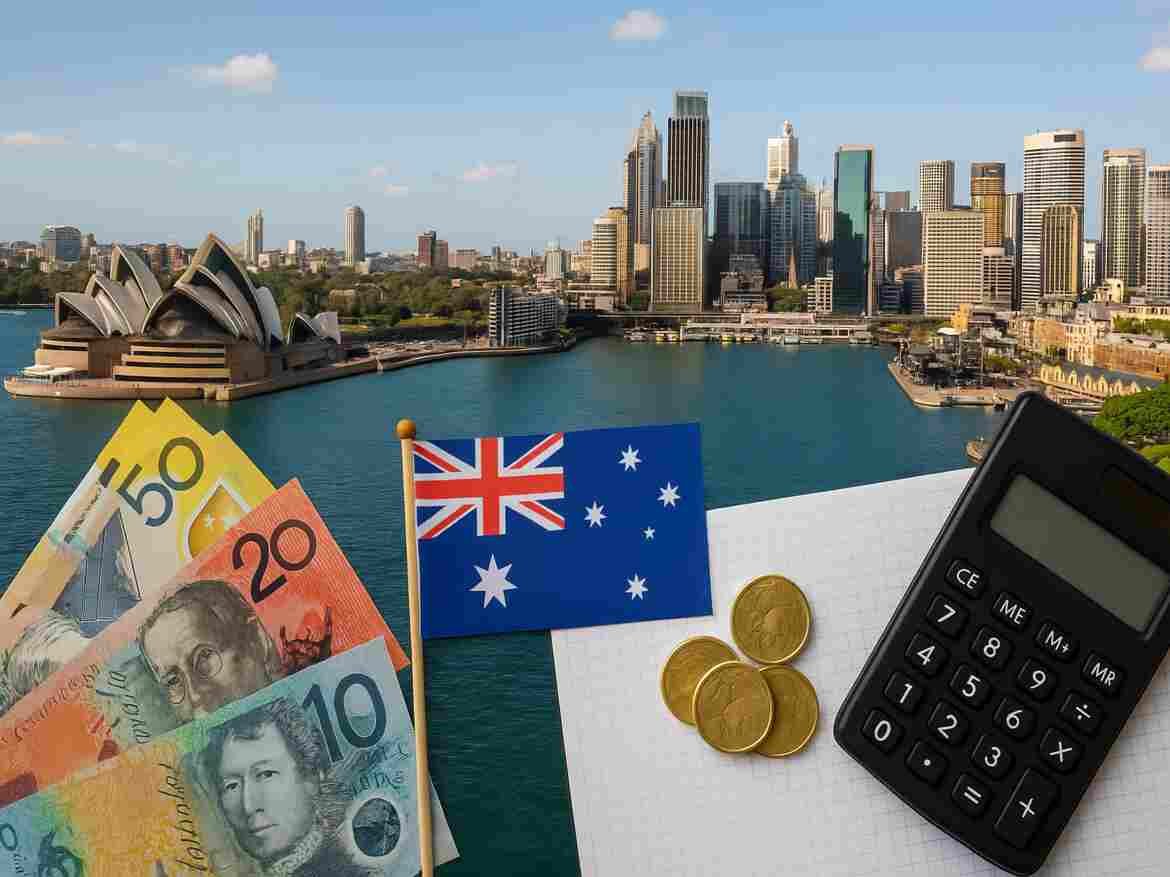
Australia is one of the most popular study abroad destinations for international students because of its world class universities, high quality lifestyle and flexible work opportunities. However, before planning to study in Australia, understanding the cost of living in Australia is essential. Living expenses cover not only your tuition fees but also accommodation, food, transport, insurance and personal spending.
According to 2025 estimates, the average cost of living in Australia for international students is around AUD 29,710 – AUD 40,000 per year, depending on the city and lifestyle choices. This translates to roughly AUD 1,200 per week, which can be higher in expensive cities like Sydney or Canberra and relatively lower in places like Adelaide or Hobart.
In this guide, we’ll break down all the living expenses in Australia, from housing to groceries. So that you can plan your budget wisely.
What is the Cost of Living in Australia?
The cost of living in Australia refers to the total expenses international students spend on their daily lives apart from tuition fees. These include accommodation, groceries, transport, utility bills and entertainment.
- Monthly average cost of living in Australia: AUD 1,733 – 3,202 (₹96,576 – 1,78,441)
- Annual average cost of living in Australia: AUD 20,796 – 38,424 (₹11.5 – 21 lakh)
Here’s a breakdown:
| Expense Category | Monthly Cost (AUD) | Monthly Cost (INR) |
| Accommodation | 800 – 2,500 | ₹45,000 – ₹1.38 lakh |
| Food & Groceries | 65 – 103 | ₹3,600 – ₹5,700 |
| Utilities | 270 – 490 | ₹15,000 – ₹27,000 |
| Transport | 100 – 200 | ₹5,600 – ₹11,000 |
| Health Insurance | 118 | ₹6,600 |
| Entertainment & Personal Expenses | 100 – 210 | ₹5,600 – ₹11,700 |
This means a student should budget AUD 400 – 500 weekly to maintain a moderate lifestyle.
City-Wise Cost of Living in Australia
The cost of living differs widely across Australian cities. Metropolitan cities like Sydney and Canberra are expensive, while Adelaide, Hobart and Darwin are more affordable for students.
| City | Monthly Cost (AUD) | Monthly Cost (INR) |
| Canberra | 4,310 | ₹2,44,593 |
| Sydney | 3,982 | ₹2,25,979 |
| Melbourne | 3,778 | ₹2,14,402 |
| Perth | 3,774 | ₹2,14,175 |
| Brisbane | 3,726 | ₹2,11,451 |
| Hobart | 3,614 | ₹2,05,095 |
| Adelaide | 3,502 | ₹1,98,739 |
| Darwin | 3,486 | ₹1,97,831 |
Tip for students: If you are looking for affordable options, Adelaide and Darwin offer some of the lowest living expenses in Australia while still providing good universities.
Cost of Living in Sydney vs Melbourne
Sydney and Melbourne are the two most popular cities for international students, but they differ significantly in terms of living expenses. Sydney, being a global business hub, is more expensive, while Melbourne is slightly more affordable and known for its student-friendly lifestyle.
| Expense | Sydney (AUD) | Melbourne (AUD) |
| Housing & Utilities | 5,308 | 4,288 |
| Public Transport | 193 | 156 |
| Food & Drinks | 20 – 40 | 15 – 25 |
| Clothes & Shoes | 150 – 200 | 200 |
| Entertainment | 41 | 40 |
| Insurance | 250 | 200 |
| Average Monthly Cost | ~4,100 | ~2,000 |
Students on a tight budget should consider Melbourne over Sydney because it is at least 20-25% cheaper in housing and transport.
Breakdown of Living Expenses in Australia
1. Tuition Fees in Australia
The tuition fees vary by degree level and university:
- Undergraduate Programs: ₹4 lakh – ₹2 crore
- Postgraduate Programs: ₹3 lakh – ₹2 crore
- Doctorate (PhD): ~₹83 lakh
- Vocational (TAFE) Courses: ₹2.2 – ₹12 lakh
Tuition fees are usually the biggest part of your total expenses when you plan to study in Australia.
2. Accommodation Costs in Australia
Housing is the largest living expense in Australia. Students can choose between on-campus dorms, private rentals or homestays.
| Housing Type | Monthly Cost (AUD) |
| On-campus dormitory | 800 – 1,400 |
| Shared apartment | 600 – 1,200 |
| Homestay with local family | 1,000 – 1,400 |
| Private studio apartment | 1,200 – 2,000 |
Saving tip: Most international students prefer shared apartments as they are cheaper and still comfortable.
3. Transportation Costs
Australia has an excellent public transport system. International students get discounts in most states.
- Bus/train ticket (single): AUD 10
- Monthly pass: AUD 100 – 200
- Domestic flight (one-way): AUD 200 – 300
- Car rental: AUD 50 – 100 per day
Students usually spend AUD 300 – 400 per month on transport.
4. Health Insurance in Australia (OHSC)
International students must purchase Overseas Student Health Cover (OHSC) for the entire duration of their course.
| Provider | Annual Cost (AUD) |
| CBHS | 1,160 |
| AHM | 1,214 |
| NIB | 1,305 |
| Medibank | 1,319 |
| Allianz | 1,324 |
| Bupa | 1,405 |
5. Utility Costs
Utility bills depend on whether you live on-campus or off-campus.
| Utility | Monthly Cost (AUD) |
| Electricity | 80 – 150 |
| Gas | 50 – 100 |
| Water | 50 – 80 |
| Internet | 60 – 100 |
| Mobile phone | 30 – 60 |
On average, students pay AUD 270 – 490 per month on utilities.
6. Food & Grocery Costs
Cooking at home is cheaper than eating out.
| Item | Cost (AUD) |
| Milk (1L) | 1.5 – 2.5 |
| Bread (loaf) | 2.5 – 4 |
| Rice (1kg) | 2 – 4 |
| Eggs (dozen) | 4 – 6 |
| Chicken (1kg) | 9 – 12 |
| Apples (1kg) | 4 – 6 |
| Restaurant meal | 15 – 25 |
| Fast food combo | 10 – 15 |
Expect AUD 65 – 103 per week on groceries.
7. Entertainment Expenses
Australia offers both affordable and luxury entertainment options.
- Movie ticket: AUD 20
- Gym membership: AUD 60 – 100
- Night outs/clubs: AUD 50 – 100 per visit
- Opera House ticket: AUD 80 – 150
On average, students spend AUD 100 – 120 monthly on entertainment.
8. Personal Expenses
Personal expenses vary by lifestyle, but typically include shopping, healthcare, and miscellaneous spending.
- Average spend: AUD 70 – 90 per week
Working While Studying in Australia
Australia allows international students to work 48 hours per fortnight (part-time). The minimum wage is AUD 17 per hour, so students can earn AUD 1,000 – 1,500 per month.
This income can cover a significant portion of living expenses in Australia. Students often work in:
- Retail (stores, supermarkets)
- Hospitality (cafes, restaurants, bars)
- On-campus jobs (libraries, tutoring, admin)
Money-Saving Tips for Students in Australia
- Live in shared apartments to reduce rent.
- Cook at home instead of frequenting restaurants.
- Apply for student discounts on transport and entertainment.
- Take up part-time jobs to balance costs.
- Apply for scholarships in Australia to reduce tuition fees.
Final Cost of Living in Australia
- Monthly Expenses: AUD 1,733 – 3,202 (₹96,000 – ₹1.78 lakh)
- Annual Expenses: AUD 20,796 – 38,424 (₹11.5 – 21 lakh)
The cost of living in Australia for international students is high compared to some countries, but it is justified by excellent career prospects, post-study work visas, and high quality of life.
Conclusion
Australia offers a high standard of education and lifestyle, but international students must budget wisely for their living expenses in Australia. The cost of living in Australia for international students in 2026-27 depends on the city, lifestyle and housing choice. With careful financial planning, part-time jobs and scholarships, students can manage costs while enjoying the benefits of studying in one of the world’s most attractive destinations.
Explore more:
FAQs
1. What is the average cost of living in Australia for international students?
The average cost of living in Australia for students ranges from AUD 20,796 – 38,424 per year (₹11.5 – 21 lakh). This includes rent, food, transport, utilities, and insurance.
2. How much money do Indian students need to study in Australia?
Indian students need around ₹16–22 lakh annually to manage tuition fees and living expenses in Australia. The cost depends on the city, lifestyle, and university chosen.
3. Which city in Australia is the cheapest for students?
Adelaide and Darwin are the most affordable cities with monthly expenses around AUD 3,500 – 3,700, compared to Sydney and Canberra which are more expensive.
4. Is Sydney more expensive than Melbourne for students?
Yes. Sydney costs about 20–25% more than Melbourne, especially for housing and transport. Melbourne is considered more student-friendly in terms of budget.
5. What is the cost of accommodation for students in Australia?
Accommodation costs vary:
On-campus dorms: AUD 800 – 1,400/month
Shared apartments: AUD 600 – 1,200/month
Private studio: AUD 1,200 – 2,000/month6. How much do international students spend on food in Australia?
On average, food and grocery expenses are AUD 65 – 103 per week. Cooking at home is cheaper, while eating out can cost AUD 15 – 25 per meal.
7. What are the transport costs for students in Australia?
Students spend about AUD 100 – 200 monthly on public transport. Most states offer student discounts, making travel affordable.
8. Do students need health insurance in Australia?
Yes. International students must have Overseas Student Health Cover (OHSC), costing about AUD 1,200 – 1,400 annually, depending on the provider.
9. What utilities are included in living expenses in Australia?
Utilities like electricity, gas, water, internet, and phone cost about AUD 270 – 490 per month. On-campus housing often includes some utilities in rent.
10. Can international students work in Australia while studying?
Yes. Students can work 48 hours per fortnight during the semester and full-time in holidays. Minimum wages are AUD 17/hour, helping offset living expenses.
11. What is the cost of entertainment for students in Australia?
Entertainment costs range from AUD 100 – 120 monthly, covering movies, gym, social activities, or outings. Lifestyle choices affect this greatly.
12. What is the minimum salary needed to cover living expenses in Australia?
Students need at least AUD 30,000 – 40,000 per year to comfortably cover accommodation, food, and personal expenses in Australia.
13. Is Australia more expensive than Canada or the UK for students?
Yes, the cost of living in Australia is higher than Canada but slightly lower than London in the UK. However, Australia offers higher part-time income opportunities.
14. Can students save money while studying in Australia?
Yes. By sharing accommodation, using public transport, applying for scholarships, and working part-time, students can significantly reduce living expenses.
15. How much money should I show for a student visa in Australia?
For an Australian student visa, you must show funds covering AUD 29,710 annually for living expenses, apart from tuition fees.




Join The Discussion